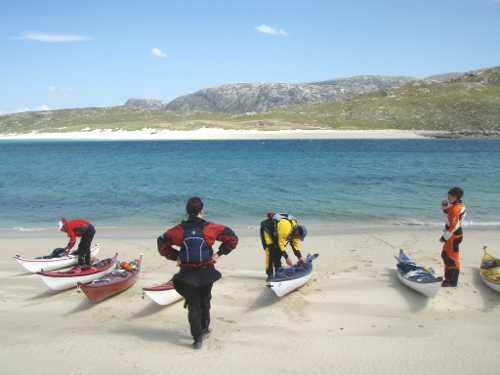
Wildlife under stress
Only two things are infinite, the universe and human stupidity, and I'm not sure about the former.
Albert Einstein ......... and he wasn't talking about
e=mc2 and relativity
| If you're concerned about the future of humanity and the natural world, and you should be because it's your future, please also visit the official websites listed below. |
Damage to the environment happens too slowly for anybody under the age of 30 to notice. And in the case of damage to the marine environment, it happens where you can't see it.
When I first went to Cornwall as a young child, you might look down from the top of a cliff and see dolphins by the dozen turning the water gold or silver. In most parts of Britain, anybody in a small boat would expect to see seals on a daily basis, and never to be out of sight of sea birds like fulmar, gannets and guillemots, never mind common sea gulls. Every town and village around Britain had a very healthy inshore fishing fleet. The deep-water fishing fleet was catching cod so big it could take two or three people to get one out of the water, and fishing made a major contribution to the economy.
I'm talking about 40 years ago. "Oh, well, 40 years is a long time, you've got to expect changes". Is that right? When I was at university 30 years ago, I could cook enough raie au beurre noir for two hungry people with just a single skate wing from the local fish shop. These days, if you want fresh local skate you'll find it's expensive and so small you need the whole fish to make dinner for two. The North Sea and Channel waters around large parts of England are so severely damaged that you can go a hundred miles without seeing a seal, fulmar, gannet or guillemot. Cod, unbelievably when the fishing industry has been regulated for over a hundred years, is now under threat of extinction.
We have this impression of jolly fishermen in yellow oilskins, chugging out to sea, struggling with wind and rain, before coming back to their loving families. All that may be true, but motorised commercial fishing is a disaster for itself and the natural environment. Local fishermen in England, and increasingly in Wales and Scotland, find it difficult to catch enough fish to pay for their fuel because the larder has been scraped bare. Literally, scraped bare. Marine species usually have a very small home territory, in which they live for a long time, getting bigger and bigger if undisturbed. What if every three or four months a heavy steel and nylon trawl descends from heaven and scrapes the area flat?
Is bottom trawling insane? Yes, clearly. So why do we do it? And why do we have agricultural and industrial techniques that pour toxic waste into the sea? Because we never think more than five or ten years ahead.
"Systematic destruction of the Earth's natural and nature-based resources has reached a point where the economic viability of economies is being challenged - and where the bill we hand to our children may prove impossible to pay". From a briefing by the Executive Director of the United Nations Environment Program, 2007.
Overpopulation?
It's all about numbers. About 95% of human problems (cost of living, cost of oil, quality of food, psychological stress, legal restrictions, pollution, traffic jams, unemployment, poverty, urban decay, famine, water shortages and most wars) resolve down to one problem. A high and increasing human population.
Until quite recently, humanity's numbers on Earth were stable at about 250 million. 250,000,000 is quite a small population for a planet. On average, each couple had two children who survived into adulthood. If we still had a small population, everybody could have a big house, air conditioning, swimming pool, TV, computer, new car, two ponies and a powerboat. Everybody could eat food from the other side of the world, buy a second home by the sea, enjoy fishing, parachuting and three foreign holidays a year, work four days a week and retire at 50, and the natural environment would cope with this very well.
In the 18th century the population balance was tilted by the development of efficient agriculture and human numbers first reached 1,000 million (one billion). In the 19th century efficient transport, healthcare and new standards of hygiene meant a sharp rise in human numbers which continues today.
In the last ninety years, a single human lifetime, the number of people on planet Earth has risen from less than 2 billion to 7.8 billion. 7,800,000,000 in February 2020, and growing. That is huge.
The consequences of overpopulation are already severe for wildlife. Unless we use our intelligence now, it is not only wildlife but our own grandchildren who will suffer and die.
The largest population increases have been in poorer countries, but overpopulation is more about consumption than it is about numbers. A human who lives in a wooden hut and eats one bowl of rice per day has little impact on the local area and none at all on the planet. It's the number of high mass consumers who make the difference, so we're really looking at the number of Americans, Europeans, and increasingly of Chinese people. Since the Second World War the population of the USA has more than doubled from 140 million to 308 million. In the same period the population of Britain has increased from 40 million to 61 million. Nearly half of that was in the last 10 years. It's more than a century since Britain was able to grow enough food to feed its population. To sustain humanity's current levels of population and consumption we need all the resources of our own planet - plus half of those of another planet as well. “By 2025, two-thirds of people will be living in water-stressed countries”. United Nations.
Overpopulation is the most important topic of all but it's the hardest for us to face. To most of us, no solution is necessary because there is no problem. There's still a lot of countryside around every city, it's all green and peaceful, if you want bears, wolves and foxes it's best to have them on TV not chewing on your sheep, dog or baby, it's probably all exaggerated anyway, and we've got other problems that actually do need thinking about. As a citizen of a democratic country, if you want to work hard and have three children, a car, a boat and two or three foreign holidays a year, no politician is going to argue with you. But are your grandchildren going to thank you? Maybe not.
“All environmental problems become harder - and ultimately impossible - to solve with ever more people.” David Attenborough.
We all take for granted the environment we grow up with, so we don't perceive it as being crowded or damaged. When we're sixty or seventy years old we start to notice what has happened during our lifetime. At that point, overpopulation may come to have some meaning for us but by then younger people just put our comments down to old age. So, if you ask "are we overpopulated?" very few people say yes. Let's turn the question around and ask "In what ways would life be different if the human population had remained stable for the last hundred years?" The global population back then was about 1.7 billion. Your editor's guess is that for the average person this would have meant a life today with:
- More personal freedom, with more time off and more open space to enjoy it in.
- More wealth. For the following reasons, each of us would now be able to pay our bills easily despite working fewer hours.
- Much cheaper land prices. With (say) only a quarter the population, anybody who wanted a little land could have a good piece. With less land needed to produce food there would have been a higher proportion of woodland and natural grassland in every country.
- Much cheaper coal and oil, which would not be about to run out by the end of this century. Again, this is supply and demand.
- Less expensive food, as a direct result of having cheaper land and oil.
- Better housing. Instead of building millions of small new homes with cheap materials, building on river flood plains and reclaimed industrial waste tips, we would have had plenty of time, timber and stone to improve existing housing.
- Lower taxes, because the state would not be running around trying to meet an ever-increasing demand for cheap housing, wider roads, more clean water, higher capacity sewage systems and waste disposal, and minimum healthcare and social services for the new billions.
- Fewer regulations. With a less dense population there is less need to restrict building, industry, hunting, boating, camping and other activities
- Better education and healthcare. There would have been plenty of time and money to build good schools and hospitals, and run education and healthcare.
- Less conflict. Wars and terrorism are usually blamed on political or religious ideology, but you don't often see serious fighting by people who have plenty of food, housing and healthcare.
Well, back in 1910 we missed the opportunity. But it's not too late to make things an awful lot worse by continued population growth.
Politicians and industrialists sometimes say that we need more people to power progress by providing labour and ideas. It's a point of view, and maybe it's right that computer technology would make slower progress if Silicon Valley had a smaller pool of talent to recruit from, or if there weren't several billion people buying computers and software. Then again, the great art, music, churches and cathedrals of Europe were created mostly by communities of only five to ten thousand people. The incredible Italian Renaissance town of Florence (Firenze) was built by a population of only 60,000-100,000. Venice was built by a population of about 150,000. The total population of Renaissance Italy was only 6 million. The Renaissance did not follow a period of population growth but a plague that wiped out about one-third of the inhabitants, and it produced Leonardo da Vinci, Michelangelo, Raphael, Petrarch, Boccaccio, Giotto, Brunelleschi, Donatello, Botticelli and Titian. Italy now has 60 million people and like most hectic, crowded modern countries it just has celebrities.
Back in the 1960s many writers and broadcasters were aware that a population explosion had started a few decades earlier. They saw signs of it all around and didn't hesitate to say so. Today, population has become the last taboo, the subject the media won't touch. One exception was on 9 December 2009 when BBC1 broadcast David Attenborough's Horizon program How Many People Can Live On Planet Earth? For readers who aren't British, we'd better explain that the BBC is funded by a licence fee so it does not have to keep its advertisers happy, and David Attenborough had spent more than fifty years as Britain's favorite naturalist and wildlife presenter so he could say anything he wanted to.
Since the Industrial Revolution of the 19th century there has been a constant steep increase in human numbers. Through agriculture, fisheries, construction, manufacturing, waste disposal, distribution and transport we have exterminated many species, and the consequences for humanity itself hardly bear thinking about. There's been a lot of debate about global warming lately - it's a very explosive topic, but it's just one small aspect of overpopulation. Check out this population graph. You may not agree that we're already overpopulated. You may feel that we still won't be overpopulated in forty years time, when there are 10 billion of us. But unless you love The Fifth Element and The Matrix so much that you want your grandchildren to live there, you really have to agree that this trend can't go on. And what's going to change it, other than a decision to have fewer children and buy less stuff?
I first put this graph online in 2010. When I reviewed it in April 2013 I found it was already way out of date. The total had reached 7,146,514,000: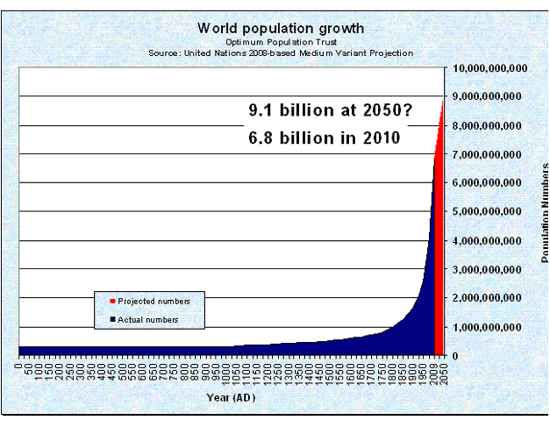
The main reason for current levels of population growth is the Green Revolution of the 20th century, which started when we began to make full use of oil for increased agricultural production. Our farming now depends on oil to build and run tractors, harvesters, dryers, chillers and other agricultural machinery, to produce fertilisers and pesticides, and to transport food to markets across the country or round the world. We have also developed crops with up to three times the yield of previous varieties. Without these advances, human population growth would already have been capped by famine, plague and war.
So far so good, but nearly all fertile land is now in use, oil is now very expensive and it's still going up in price. It is said that oil reserves will run out before the end of this century. In some countries 20% of fertile land has been turned over to production of biofuels. Despite irrigation schemes, or in many cases because of them, desert land is spreading. At the same time, the UN Food & Agriculture Organization says that to avoid global famine we must increase food production by 70% in the next 40 years. FAO report How To Feed The World 2050.
Some say "no problem, European and American farmers let apples rot on the tree because they're too expensive to pick, and agricultural subsidy systems often pay farmers not to produce food". America certainly produces enough food to feed itself and will continue to do so as long as the oil keeps flowing, but few European countries could produce enough food for their own populations, unless they add insects and vat-grown yeast to their diet. In Britain this became obvious on the outbreak of World War II when the food imports reaching the UK were halved by the risk of German submarine attacks in the Atlantic and the need to use merchant ships for military cargos. Food rationing was introduced in 1940. Meat and bacon were still rationed in 1954, nine years after the war ended. The 1939-45 war proved that Britain could not feed her entire population despite Dig for Victory campaigns and the Women's Land Army to help with agricultural production. And the UK population back then was only two-thirds what it is now. In peacetime, wealthy countries can avoid the problem by importing huge quantities of oil, food and timber from overseas. Even the USA is teetering on the edge of becoming a net food importer.
Let's get back to the 2009 Horizon programme. David Attenborough said "as I see it, humanity needs to reduce its impact on the Earth urgently and there are three ways to achieve this. We can stop consuming so many resources, we can change our technology and we can reduce the growth of our population. We probably need to do all three."
On the first point, consumerism has existed for only sixty or seventy years, not enough time for us to have physically evolved into Homo consumerens so we won't really suffer if we use our imagination and willpower to consume a lot less. On the second point, if we can't get a grip on our numbers then technological change can certainly help to feed us but it's likely to mean eating tasteless hydroponic vegetables (we've already perfected the zero-taste tomato) and farmed carp. By the time we're eating yeast grown in vats, willpower will probably start to look like a pretty attractive option. On the third point, the population trust Population Matters says the solution is simple. A couple should have no more than two children.
But what are we actually doing? Well, several countries in Asia and eastern Europe have reduced their birthrate but other countries are slow to follow. The United States population is expected to increase 43% in the next forty years, from 308 million in 2010 to 439 million in 2050. And as previously mentioned, overpopulation is about consumption as much as it as about numbers of people. Humans as a species have not so far demonstrated any ability to consume less than the max.
Do you remember in 2006 when the newspapers all had a good laugh at the tiny Himalayan country of Bhutan for deciding to dump the Gross National Product as a measure of national success, and substitute Gross National Happiness? I smiled too, at the time, but I've just had a look at it while researching this page. As reported by Bloomberg Business Week, pre-industrial Bhutan of the mountains, forests, villages, Buddhist temples, 24 languages, 59% literacy and life expectancy of 62 was rated the happiest country in Asia and the eighth happiest country in the world. The people are very poor, but the state gives them healthcare and education which are funded by selling hydroelectric power to India and by charging tourists 200 USD a day. With an average annual income of 1400 USD hardly anybody in the country earns enough to pay tax. Your editor is not sure if they are happy despite this or because of it, but he has noticed that the richer people get, the less pleasant they are to their neighbours. In the same 2006 survey the US was only twenty-third because of the rich-poor divide and spotty health care. And that was in 2006, before the economic recession really bit down hard.
NOTE - the above paragraph went onto the Kayarchy site on 9 November 2010. Three days later, the British government announced that it had asked the Office for National Statistics to prepare a quarterly assessment of the happiness of Britons. Prime Minister David Cameron said "it's time we focused not just on GDP [Gross Domestic Product] but on GWB - general wellbeing". So is Kayarchy spookily prescient or is the Prime Minister a keen reader?
We don't have government agencies to deal with overpopulation. What we have is the exact opposite. There are government agencies to increase trade, industry and economic development; we have free medical treatment for infertility; we have national constitutions and international conventions that say it's a basic human right to have all the children you want; a general rule that the more children you have, the more tax breaks and child benefit you get; ongoing religious objections to birth control; and average exposure of several hours a day to advertising in newspapers, TV, magazines and online services that are funded by industry and retailers. All of which is about as uncool as it is possible to get. Homo sapiens, we call ourselves. The wise man. Ouch.
• Wikipedia - http://en.wikipedia.org/wiki/Overpopulation
• UN Environment Programme's Global Environmental Outlook Year Books. In particular GEO-4 2007 - www.unep.org/geo/yearbook/yb2007
• UN Food & Agriculture Organization - www.fao.org
• Population Matters (of which David Attenborough is a patron) - www.populationmatters.org
• Interligo / Fondation SQLI (excellent website in French) - www.interligo.org
Demographics & terrestrial wildlife
We love to watch wildlife programmes on TV. We prefer not to be told that most of the iconic animals that we love to watch are now counted in thousands, not billions or even millions. Many of them are under direct and immediate threat of extinction. Not since the die-off of the dinosaurs have so many species been on the road to extinction.
The more of us there are, the less room there is for other species. The UN says we need to increase food production, and in a search for sustainable ways of fuelling our new consumer lifestyles we are also growing more biofuel crops. Putting more land under the plough means more habitat loss, more runoff pollution from agriculture, and goodbye to many nature reserves.
For wildlife, our most destructive activity is clearing forest and grassland for farming. A species that has lost most of its habitat can be pushed to the edge of survival by more intensive farming practices, pesticides, industrial pollution and legal hunting. At that point highway deaths, illegal hunting, litter and even eco-tourism can become significant factors.
With nearly eight billion people on the planet, the pace of change is such that anybody reaching the age of sixty can look back at a very different world that he or she knew at the age of ten. For example I've always lived in the countryside, and when I was 10 years old I couldn't step outdoors without seeing a sparrow, lapwing or hare. I wasn't far from a river and the sea so it was easy to see kingfishers and dolphins. Now all of these are quite rare in Britain. If you had told anybody back then that sparrows or cod would soon be on anybody's conservation red list they would have laughed at you. I'll come back to the common cod-fish below.
Sparrows were once one of the commonest town and country birds worldwide, and are mentioned in the Bible and by Catullus. Previously extremely common in Britain, they were used by Chaucer and many other writers as a symbol for the cheeky, confident survivor. Their population has declined in the UK since the 1970s, overall by 68% but by 90% in urban areas and they have practically disappeared from most parts of London. The reason is unknown; suggestions range from disease (unspecified) to an increase in radiation from mobile phones. Lapwings and hares have both been severely affected by increasingly intensive farming practices. The lapwing has decreased by 80% since 1960 and hares have decreased by 98% since 1930. The kingfisher is in long term decline due to river pollution and riverbank engineering works, and there are now fewer than 16,000 in Britain. Dolphins are now very seldom seen in coastal waters around England, although they can sometimes be seen off Wales, and are fairly easy to see in Scottish waters.
In environmental terms, if the question is whether hares, tigers or wolves are endangered, the answer depends whether you're right-wing or left-wing, whether you are a farmer in what was formerly hare, tiger or wolf country, and whether you expect to have difficulty keeping up the payments on your house. Although hares have been reduced by 98% in the UK and are locally extinct in much of the country, it is still legal to shoot them for sport and to protect crops. And although there are now only 5,000 wolves altogether in the lower 48 states of the USA (that's one wolf for every 61,600 humans... or one wolf for every 15,000 pet dogs) they have been briefly removed from the US endangered list on four occasions in recent years.
The criteria used in the Red List of Threatened Species from the International Union for the Conservation of Nature are widely accepted as realistic and non-political. The IUCN considers the following film-star species to be vulnerable, which means a high risk of extinction in the medium term:
- Polar bear
- Lion
- Elephant
- Cheetah.
Yes, that's right, by the time your grandchildren want to visit any of Africa's game reserves there's a good chance there will be no more lions, elephants or cheetahs except in small wired compounds.
The more serious IUCN risk categories are threatened, near endangered, endangered and critically endangered. The last of these categories is next to extinct and often means that the species now survives only in a zoo or has not been seen for some years. None of these categories include local extinction. If a species has been exterminated across most of Europe or North America but there is still a healthy population in Greenland, it is not considered to be endangered.
In the global, final, gone forever, make films about "saving" them, last chance to see, extinction tourism, cryogenic storage of last example, wave goodbye sense of the words, within the last fifty years all these species have become threatened to critically endangered:-
- Gorilla
- Orang utan
- Zebra
- Black rhinoceros
- Leopard
- Snow leopard
- Jaguar
- Tiger
And this is just a very small sample, chosen because we like to watch them on TV. The extinction list of apes, monkeys, amphibians and small creatures is so long it's hard to know where to start.
Demographics & marine wildlife
The list of marine species that are threatened, near endangered, endangered and critically endangered includes the following film-star species:
- Blue whale
- Sei whale
- Fin whale
- Beluga
- North Atlantic right whale
- Sea otter
Kayarchy's UK site has some additional information about the current problems of North Atlantic seals, otters and sea and estuary birds. Click here.
Most of what follows is from another TV programme by David Attenborough in the Horizon programme, first broadcast on 4 October 2010 and entitled The Death of the Oceans?
Only 4% of the oceans (mainly in the Torres Straits and along the north coast of Australia) have not so far been significantly harmed by human activities. Areas where marine ecosystems have been particularly badly hit include the North Sea, the Mediterranean, and the waters round Iceland, Alaska, New England, China and Japan.
Humans have very little idea whether species of fish, crustaceans or even marine mammals are endangered or not, because we have had very little idea how many there are, what they eat, where they breed, how long they live, or where they live for the part of the year when they're not around our coasts. The Census of Marine Life is the first ever baseline survey of marine wildlife, and it has only just been completed. It's a pretty amazing resource. www.coml.org
CoML researchers identified 6000 new species of worms, fish, weed, etc, some of which are already heading for extinction. Perhaps even more important, the Census revealed connections between species that help us to understand what keeps the trophic web together.
We know from writings by early travellers and sailors that 300 years ago the seas everywhere were bursting with life to an extent that we find hard to believe. Because CoML is the first worldwide survey, the only real way to assess what has happened over the last few centuries is by examining records kept by commercial fishermen. Enter the CoML project on History of Marine Animal Population, which has its own great website at www.hmapcoml.org
- Columbus crossed the Atlantic in 1492. After Cabot explored further north in 1497 every fisherman in Europe soon heard about the Grand Banks fishing grounds off the east coast of America, and the rush was on. Fishing fleets found the same familiar species of fish as at home, but they were astonished by their numbers and size which made it worth sailing thousands of miles across the stormy North Atlantic and salting their catch down for storage.
- In the 16th century many European whalers hunted bowhead whales off the coast of Labrador. Many fish and marine mammals live a long time, and it seems that bowheads can live two hundred years. Examination of bowhead whales killed in 2007 revealed ivory harpoon heads that were plunged into them in the days of sail, and an explosive harpoon head made in New Bedford in 1890. 19th century commercial whaling in the Pacific wiped out 60% of bowheads in twenty years. Commercial whaling was made illegal in 1966 but overall the bowhead is still an endangered species.
- By 1859 fishermen in Maine were so concerned about dwindling stocks of fish that state regulation of fisheries was introduced.
- Even so, during 1871 fishermen in the Gulf of Maine landed a total of 70,000 metric tonnes of cod using sail, oar and hand-lines.
- Today, fishermen in the Gulf of Maine land only 4,000 metric tonnes a year despite using powerful steel fishing boats and electronic fish finders. Some fishermen argue that quotas should be increased for species which have increased in numbers since semi-effective regulation was introduced twenty years ago, but others point out that this increase is nothing compared to the steady downward slide caused by overfishing for the previous 100 years. "If present trends continue, commercial fishing as we know it will have collapsed by 2050". Professor Jeffrey Bolster of the University of New Hampshire.
- It's not just Maine. Fish stocks globally have been drying up for decades and many species have reached the point of collapse. In 2007 a briefing by the Executive Director of the United Nations Environment Program predicted "a global collapse of all species being fished by 2050, if fishing around the world continues at its current pace."
- Back in Europe in the 1830s, sail-powered fishing boats were regularly landing loads of shad, haddock, sturgeon and salmon in the North Sea. These were fished to local extinction between 1850 and 1910, partly as a result of increased demand after the European railway network was built in the 1840s and partly from the introduction of steam-powered trawlers.
- Ling are still caught in the North Sea but those now being caught weigh about one-quarter as much as those being landed in 1840.
- Without fishing, cod naturally reach two metres long and 65 kg per fish. However the average cod now caught in the North Sea weighs 1.1 to 2.5 kg and is less than 3 years old. They are caught before they are old enough to breed.
- Canada has at times suspended cod fishing over large areas in an effort to preserve stocks. In the 1950s and 1970s Iceland decided to protect its fisheries by extending its territorial waters out to 200 nautical miles from the coast. British fishermen were not happy about this, resulting in "Cod Wars" with many dangerous incidents at sea. Of course Britain took a similarly protective attitude to fish stocks in its own territorial waters, severely undermined a few years later when European Union fishing policies gave Spanish and French fishing fleets free access to those areas. During World War II, Atlantic cod populations rapidly recovered when fishing was reduced for six years, but the situation now seems to be worse. According to Wikipedia "several cod stocks collapsed in the 1990s (declined by more than 95% of maximum historical biomass) and have failed to recover even with the cessation of fishing...Many other cod stocks remain at risk. The Atlantic cod is labelled VU (vulnerable) on the IUCN Red List of Threatened Species".
- Worldwide, top predators such as tuna and some sharks have been reduced by 90% in the last fifty years. Which may seem like good news for smaller species that were eaten by them, but it's not as simple as that. Removing one level of the trophic web is just as likely to be bad news for the rest of the ecosystem.
The human activities that harm marine species are over-fishing, the death of small fish thrown back because they are under the regulation size, "bycatch" of other species such as dolphins and turtles that are trapped by abandoned fishing gear, destruction of habitat by trawls, industrial and agricultural pollution, marine pesticides used by merchant shipping and fish-farms, acidification of the oceans by rising levels of CO2 in the atmosphere, climate change, and production of oil & gas.
We have never really given credit for the fact that marine species tend to live a long time, take some years to reach breeding age, often have quite a small territory, and are vulnerable to all sorts of damage from physically dragging a heavy trawl over the sea bed, through propellor injuries caused by high-speed leisure craft and by larger ships manoeuvring in shallow water, to ship engines that make the ocean a noisy place. Dissection of dead whales and dolphins often indicates that they have noise-induced hearing loss, just like a human who has worked for many years in a noisy factory. This threatens the survival of any animal that hunts by sonar.
What are we going to do about it?
The oceans are a lot more than just home to cute or weird animals. Covering 70% of the surface of the planet, they are its heart and lungs. In the words of Dr Andrew Rosenberg of the Census of Marine Life "the oceans are literally the support system for all life on Earth. If you don't care about the oceans then you're basically saying 'I don't care what happens about life on Earth'."
We are running out of time to moderate our own behaviour. Professor Ove Hoegh-Guldberg of the University of Queensland, a marine biologist and expert on the Great Barrier Reef, says "we are right at the moment where if we go any further we will not be able to save the oceans, and that will be at great cost to ourselves, but right now we can do a lot".
So far we have been very good at exploiting the world around us; quite good at scientifically measuring the decline of other species; but not so good at doing anything about it. We make pretty wildlife programmes for TV that take care not to mention that we are exterminating these species. Each of us knows a lot about work, cars, sports, music, celebrities, scandals, history, politics, crime, archaeology, psychology, home improvements, hobbies and foreign holidays, but few of us know anything about protecting wildlife habitats.
Except for a few Himalayan buddhists, all eight billion of us measure our personal and national success by economic growth. Zero growth risks a catastrophic slump into economic depression. Unfortunately economic growth doesn't necessarily make you happy; it is more or less the same thing as environmental destruction; and even as an economic model, it just isn't sustainable. In a world with finite resources, you can't continue to increase industrial production by 3% per annum, forever. Our governments know this perfectly well, but nobody wants to lose competitive advantage by being one of the first to reduce production. The largest consumers want to be the last to reduce production, hence the refusal by the USA to ratify the 1997 Kyoto Protocol on reduction of greenhouse gas emissions. The USA is the largest producer of greenhouse gas, emitting about twice as much as China, although China is catching up fast. Australia has ratified the Kyoto Protocol but not brought in any legislation to implement it. One way or another, our attitudes will have to change.
It would be great if the eight billion of us made a joint decision to change, because then we could change in our own time and keep all our culture, technology and knowledge. However that's about as likely as us learning to levitate. Even small new ideas have to go through a period of ridicule, followed by violent attack before they are accepted as obvious and inevitable, and we're talking about the biggest cultural change since the Industrial Revolution. Your editor has a nasty feeling that we will focus on other things until our grandchildren witness the collapse of the current system. And it's not as if we don't have plenty of other things to focus on - economic recession, political and religious extremism, urban decay, bad housing, drugs, crime, policing, terrorism, new towns, pollution, health issues, work, stress, road rage, bullying, rising food prices, famine, drought, flood, oil spills, oil shortages, genocidal wars. How many of these problems are actually signs of overpopulation?
They say those who don't study history are condemned to repeat it. Every previous culture which lived a sustainable existence in balance with its resources was overwhelmed by the consumer society next door. Tibet, most recently. And every consumer society used up its own resources, expanded to get hold of more resources, got too big and was taken down by outsiders with little to lose. That includes the Hittites, Assyrians, Sumerians, Persians and various Chinese, Roman, American, French, British and Russian empires.
Modern humans evolved anything from 50,000 to 200,000 years ago, depending who you believe. Either way, that's the blink of an eye for a species. Most of our fellow creatures have existed in their current form for between a hundred and a thousand times as long. Horses have been around for 10,000,000 years and that's not much. Most species have been around, with slight variations, for 20,000,000 to 50,000,000 years. Dragonflies have been here for 325,000,000 years. The first humans didn't set foot in Europe until 40,000 years ago. 12,000 years ago none of us had discovered farming and there were still very few humans, mostly living a very primitive existence.
We're fast learners, though, hence the damage we have done in the last 150 years. David Attenborough notes that "in the oceans we have depleted fish stocks massively. 10% of the world's coral reefs are estimated to be degraded beyond recovery. A third of the world's amphibians, a fifth of all mammals and 70% of all plants are currently under threat of extinction". The November 2009 press release from the International Union for the Conservation of Nature confirmed that of 46,677 species of animal and plant surveyed around the world, 36% are threatened with total extinction. It's time we got a grip, for our sake and theirs.
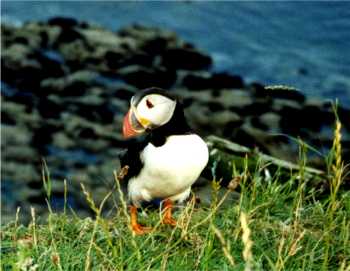 European
 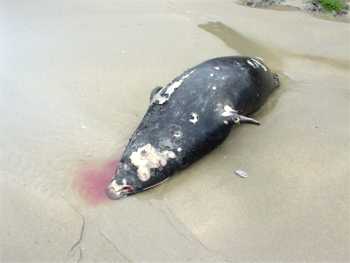 In France, Brittany is a natural focus for sea kayakers from half of Europe. It also gets a lot of general tourist traffic, afoot and afloat, and has been unlucky with oil spills. After the infamous "black tides" only 400 pairs of guillemots remained in the Sept Isles. Now there are only 12 pairs on Rouzic. Conservation authorities have responded by prohibiting fishing and camping on many of the smaller islands, and establishing exclusion zones round seabird colonies. Most of these areas are marked off with lines of yellow buoys and/ or warning signs, indicating "no access" from 15 March to 31 August.
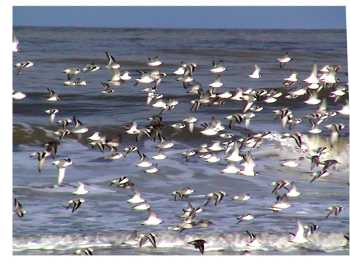 On a local or national level, sea kayakers have agreed to stay clear of certain areas at certain times. For example, conservation bodies have asked kayakers to stay clear of South Stack on Anglesey to avoid disturbing auks during the breeding season.
 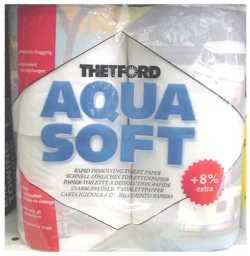 In any part of the world, if you hide toilet paper or faeces in a plastic bag or under a rock, it will take forever to decompose and may offend a later visitor. In a crowded area, either bury them with a trowel or take them back out with you.
 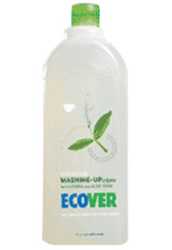 You can wash dishes with an environment-friendly liquid such as